Pikes Peak Ascent & Marathon
America's Ultimate Challenge — 13.32 miles and roughly 7,800 vertical feet up the Barr Trail from Manitou Springs to the 14,115 ft summit of Pikes Peak, and for marathoners, all the way back down again.
The two races
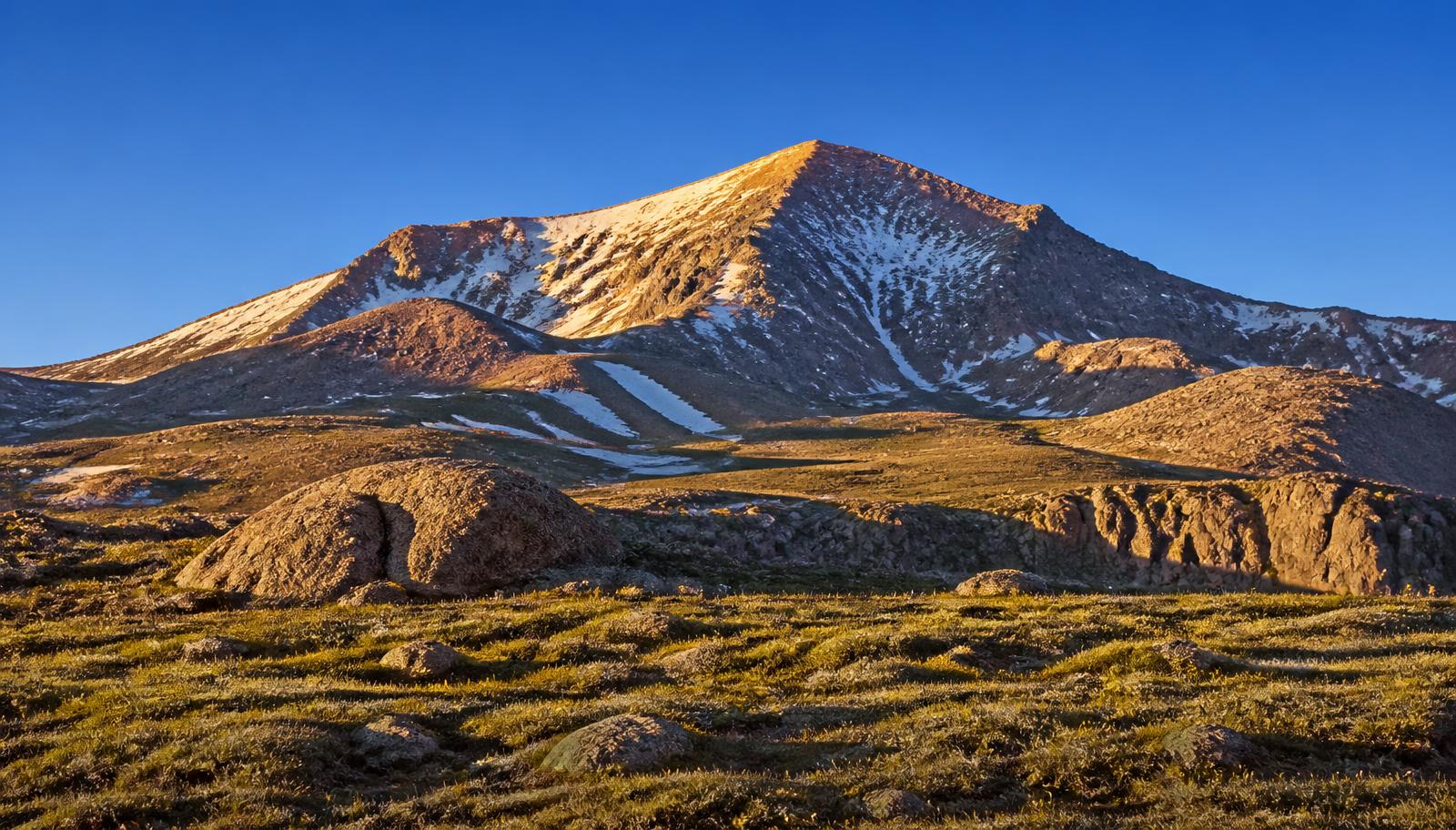
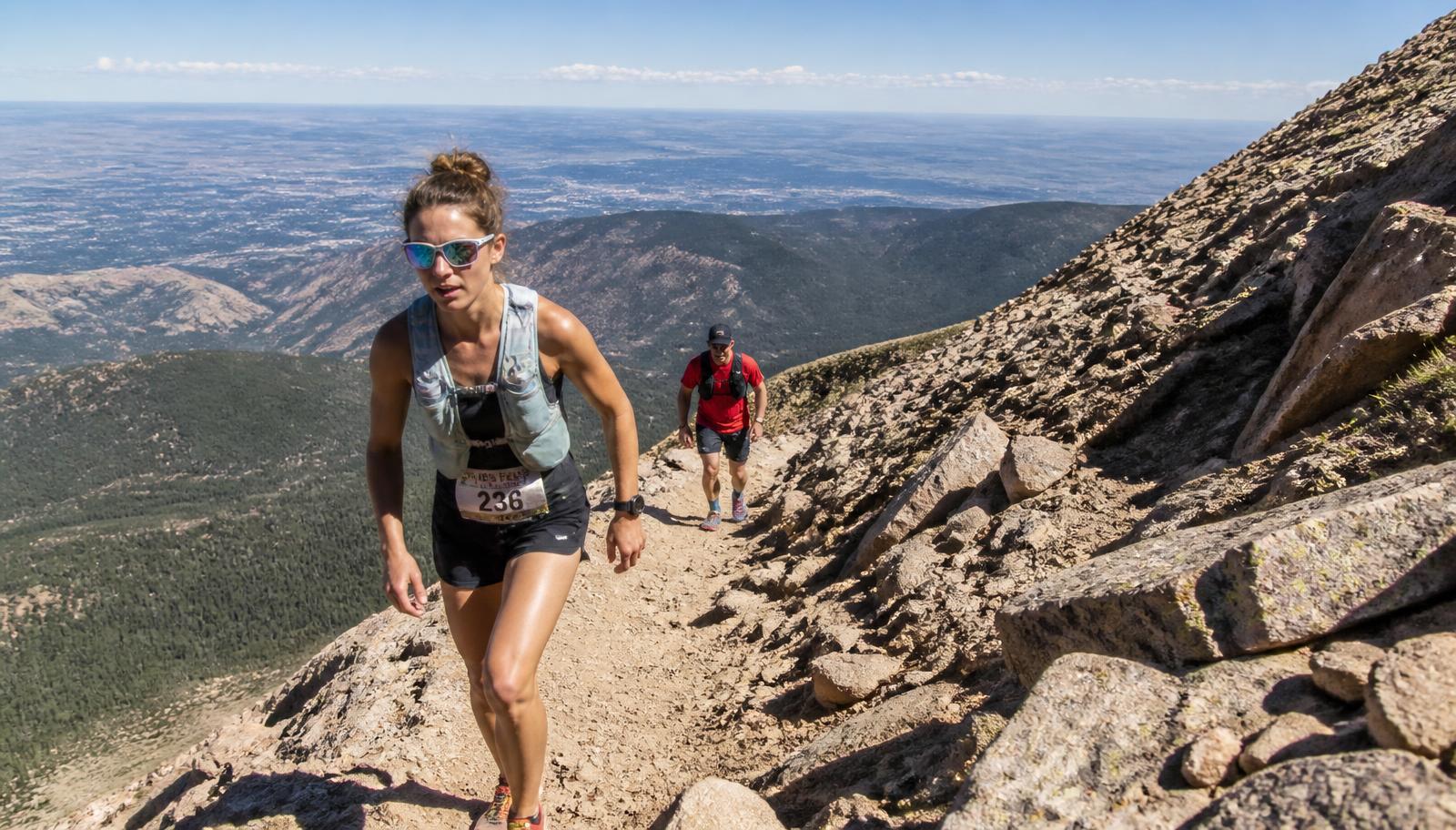
The Pikes Peak Ascent is a one-way mountain race: runners start on Manitou Avenue in Manitou Springs at about 6,300 ft and climb the Barr Trail through switchbacks, forest and finally bare alpine talus to the summit. It is roughly 13.32 miles long with about 7,800 ft of climbing, and the air at the finish holds around 60% of the oxygen available at sea level.
The Pikes Peak Marathon uses the same climb and then sends runners back down the way they came — about 26.2 miles with 7,800 ft up and 7,800 ft down on rocky, root-laced singletrack. The descent is famously harder on the legs than the climb, and plenty of runners record a faster first half than second.
Runners who finish the Ascent on Saturday and the Marathon on Sunday complete what the race calls the Doubler — one of the hardest weekends in trail running. Our Doublers & records tab ranks every official Doubler weekend by combined time.
History
The modern races trace back to 1956, when Dr. Arne Suominen — a Finnish-born physician and former distance runner — challenged cigarette smokers to race him up the mountain to prove what smoking did to the lungs. Fourteen or so runners started that August; only two of them smokers. Local gym owner Monte Wolford won, and Suominen finished third (Colorado Springs Pioneers Museum).
In 1959 Arlene Pieper became the first woman to finish a marathon in the United States by completing the Pikes Peak Marathon — years before women were officially welcomed at road marathons. The Ascent was later added as a separate one-way race for those who wanted the climb without the punishing descent, and the two now run on consecutive days each September.
The mountain still writes its own history. Matt Carpenter, who grew up racing on the Peak, set course records that have stood for decades and compiled the results archive this project builds on. Weather has repeatedly rewritten the record book too: the 2018 Ascent was cut short at Barr Camp (7.6 miles) for lightning and freezing summit conditions, and the 2024 Marathon was turned around near Barr Camp at about 14.75 miles because of snow and ice up high. Both are flagged throughout this dashboard so they never distort all-time records.
Race schedules, entry information and official history are published by the organisers at pikespeakmarathon.org.
The course, mat by mat
Timing points along the Barr Trail give the splits that drive the pacing charts here: the start in Manitou Springs, the top of the W's, No Name Creek, Barr Camp (about 7.6 miles, 10,200 ft), the A-Frame at treeline (roughly 11,950 ft), the Cirque and finally the summit at 14,115 ft. Marathoners cross most of them a second time on the way down.
Use the Elevation & splits tab to see how a runner's pace decays with altitude, and Head-to-head to place two runners side by side segment by segment.
About this project
Pikes Peak Results Lab is an independent, non-commercial archive built for runners, families and statisticians. It compiles publicly published official results into one searchable dataset with age group records, career totals, Doubler leaderboards and split analytics. It is not affiliated with or endorsed by the Pikes Peak Marathon organisation. Spotted an error in a result? Please contact us.